Troubleshooting Reasons Why the Blade Doesn't Rise on Hydraulic Shearing Machines
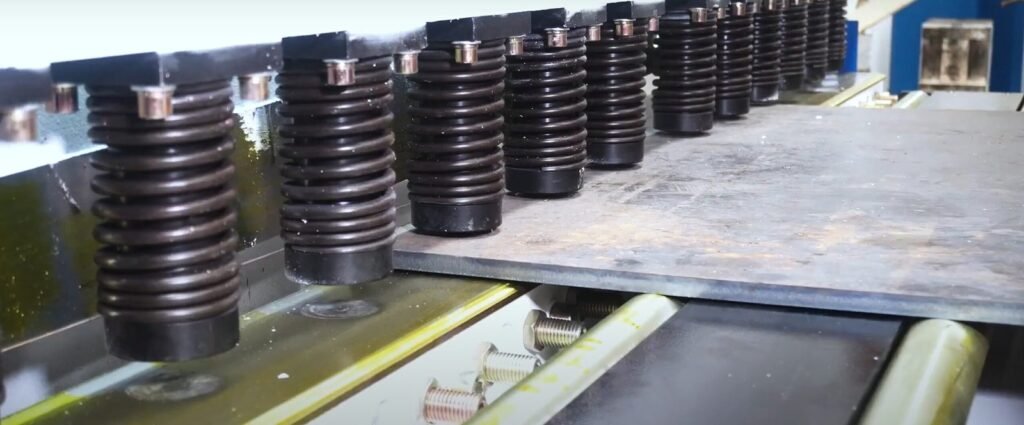
The reason of hydraulic shearing machine blade not back is mainly hydraulic system failure and debris blockage caused.
But in this blog ensures each aspect of the troubleshooting process for the hydraulic shearing machine is clearly outlined.
Covering electrical systems, control systems, transmission mechanisms, mechanical structures, and hydraulic system faults, nitrogen pressure, etc.
I will teach you step by step how to troubleshoot the problem and come up with a solution.
Electrical Faults:
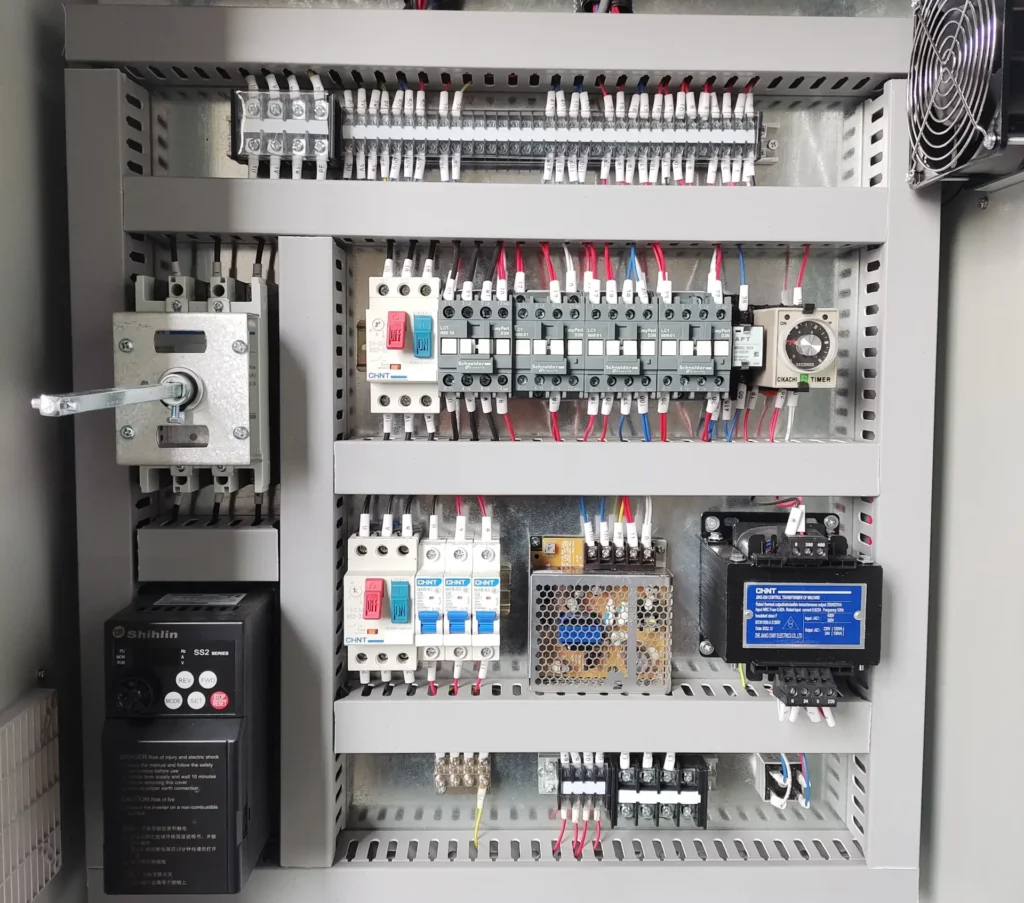
Firstly, it’s crucial to inspect the shearing machine’s power supply and control system to ensure they are operational without any faults. Common electrical system failures include motor damage, controller malfunctions, and sensor failures. Verify correct operation of the motor and oil pump in terms of forward and reverse rotations.
-
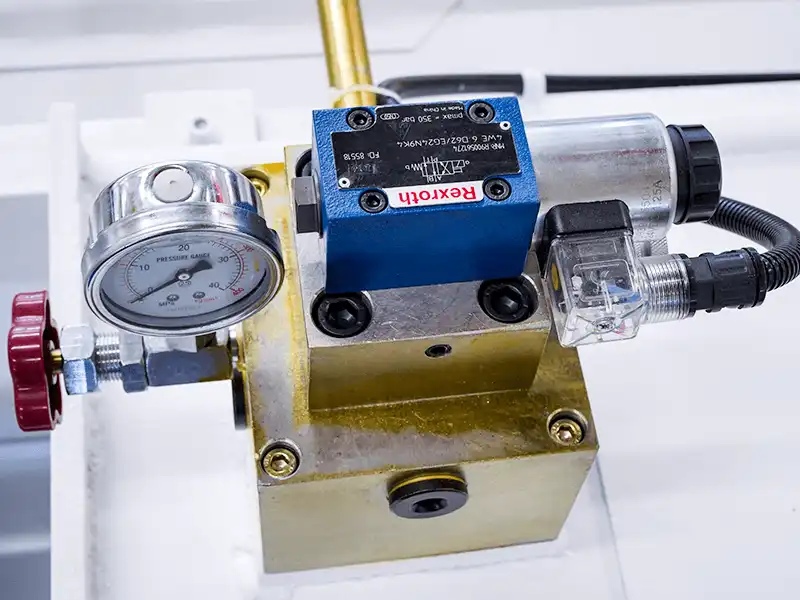
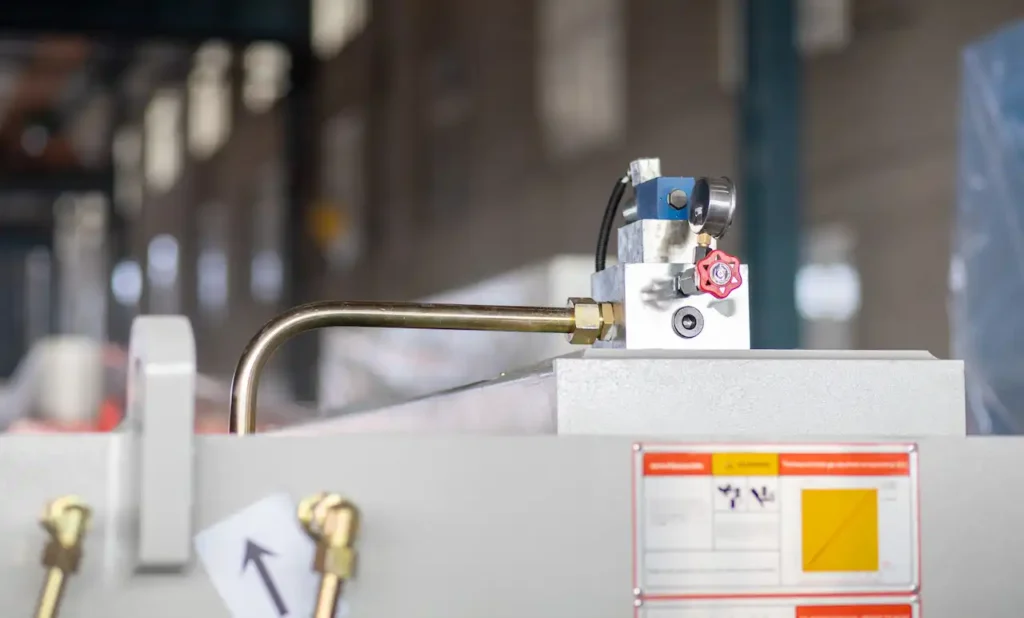
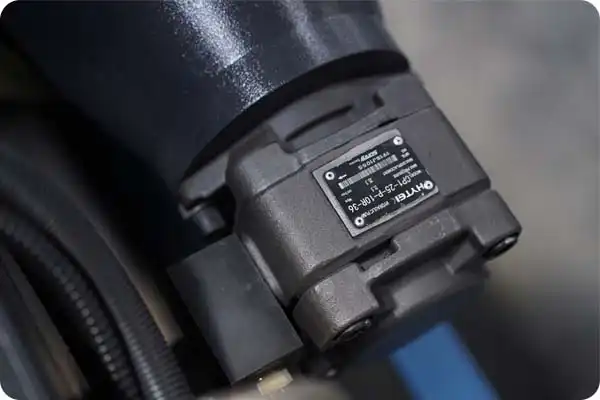
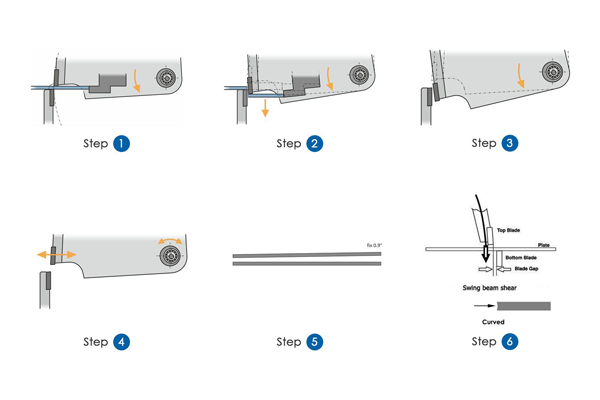
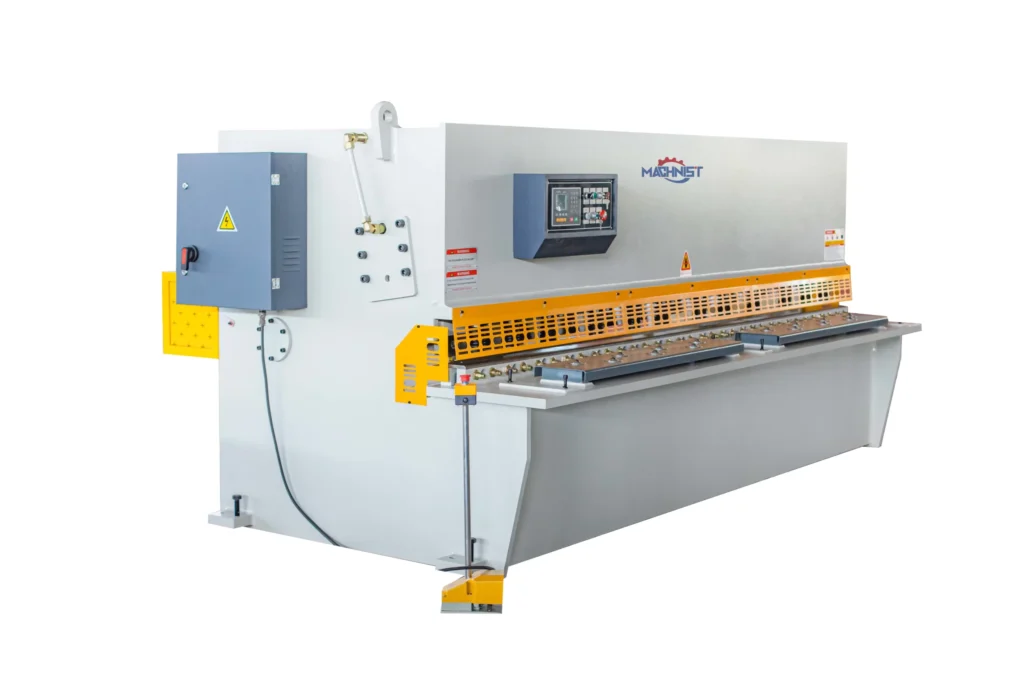
- Hydraulic System Drive: The hydraulic swing beam shearing machine operates using a hydraulic system comprising components such as hydraulic pumps, cylinders, and valves.
- Cutting Action: During operation, the operator places the metal sheet to be cut on the machine’s worktable. The hydraulic system controls the hydraulic oil flow into and out of the cylinder, moving the upper blade downwards or upwards.
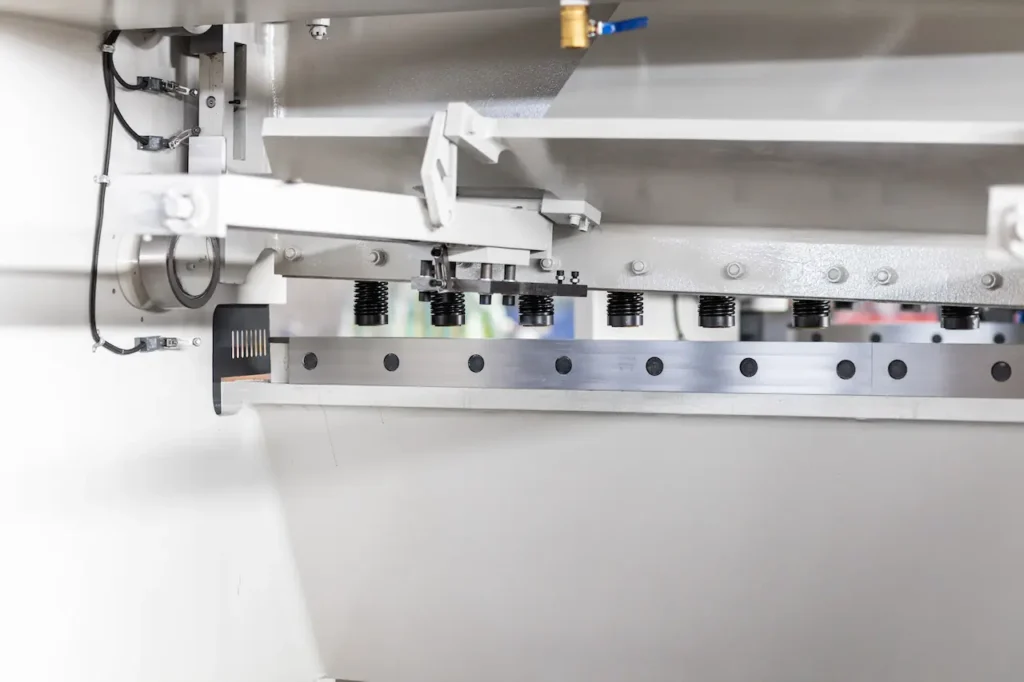
- Cutting Process: The upper blade applies downward force through the hydraulic cylinder, clamping the metal sheet with the fixed lower blade. Once clamped, the upper blade swiftly descends, shearing the metal sheet against the fixed lower blade.
- Control and Adjustment: Equipped with an electronic control system or manual interface, operators can adjust cutting parameters such as blade clearance and cutting speed to accommodate different thicknesses and hardnesses of metal sheets.
- Safety Features: The machine is typically equipped with safety devices like protective covers and emergency stop buttons to ensure operator safety during operation.
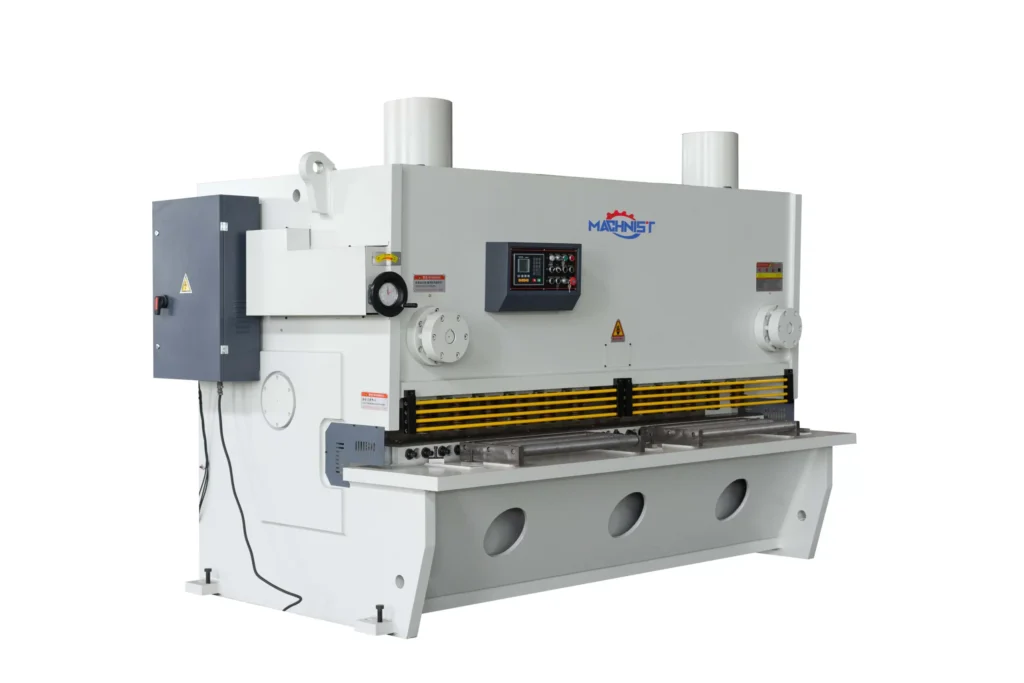
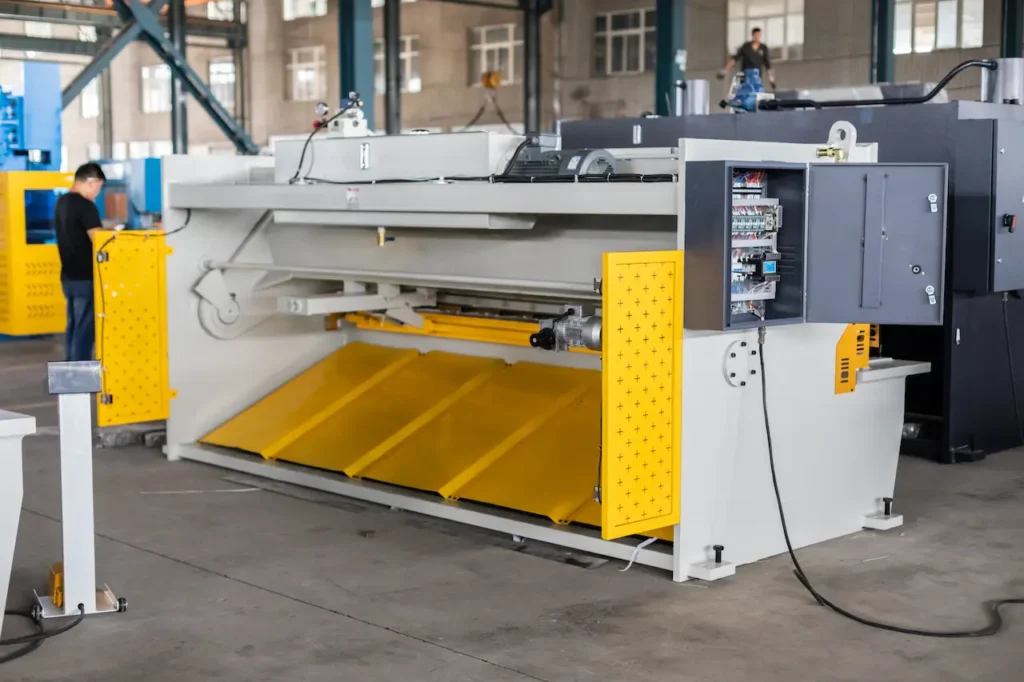
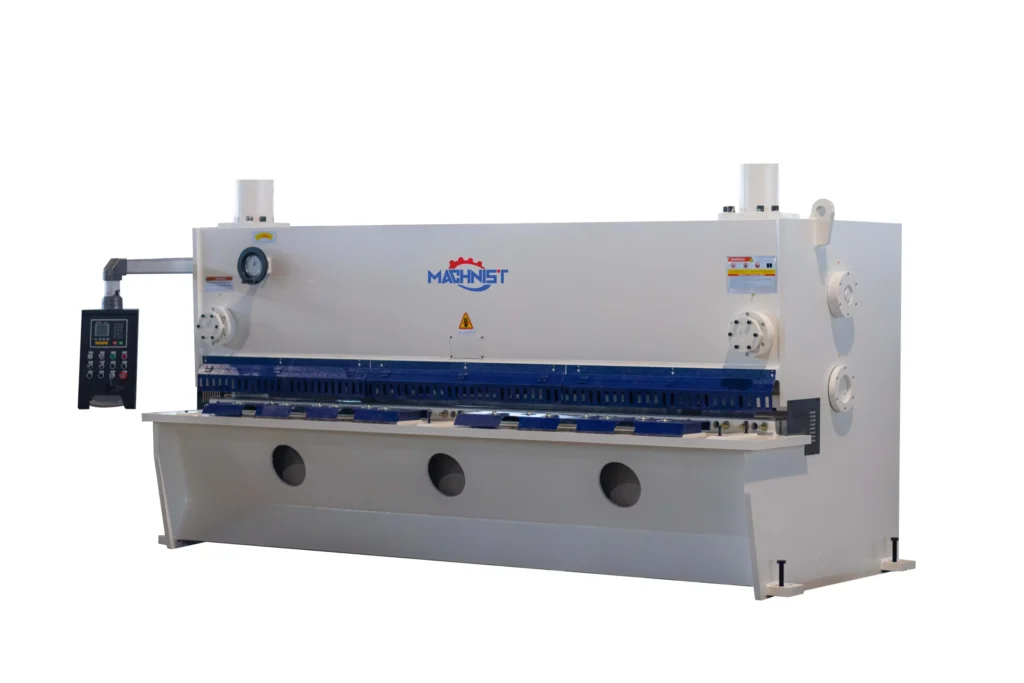
Hydraulic Guillotine Shearing Machine
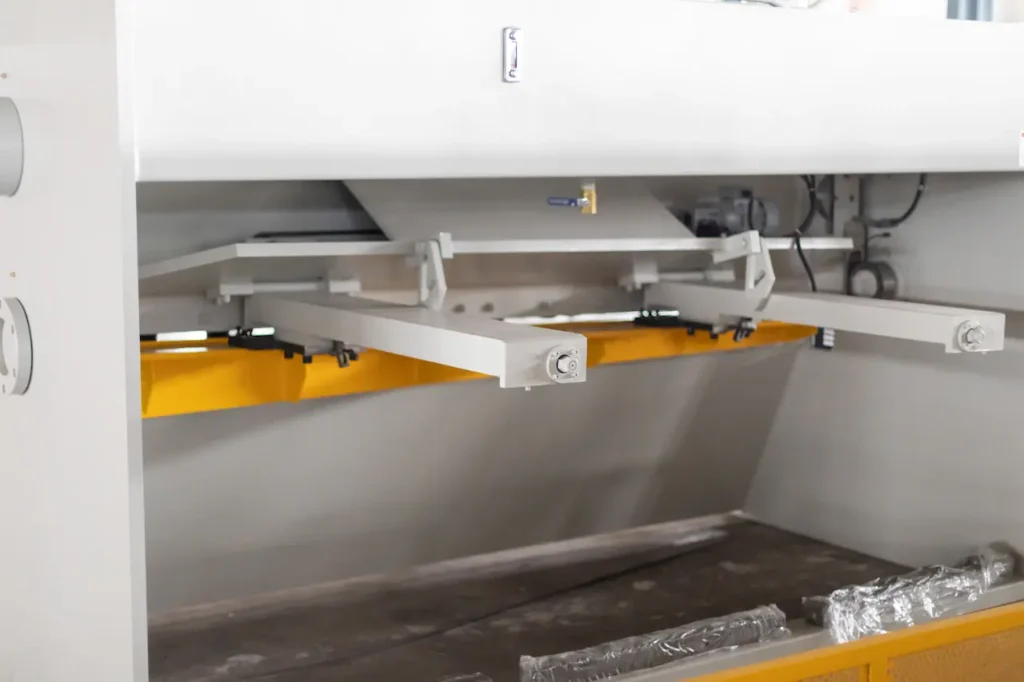
- Blade Motion: The hydraulic guillotine shearing machine employs a different blade structure, typically controlled by the hydraulic system to open and close the blades.
- Blade Movement: The blades of the guillotine shearing machine are controlled by hydraulic cylinders, moving along a straight line to clamp and shear the metal sheet against the lower blade.
- Cutting Force Control: The hydraulic system controls the opening and closing of the blades, ensuring sufficient force is applied through the hydraulic cylinders to achieve clean cuts on the metal sheets.
- Applications: Guillotine shearing machines are suitable for applications requiring precise and stable cutting actions, particularly for tasks demanding strict dimensional accuracy.
- Operation and Adjustment: Similar to the swing beam shearing machine, it features an electronic control system or manual interface for operational adjustments and monitoring during cutting processes
Application of Hydraulic Shearing Machines
- Hydraulic shearing machines are widely used in various industries for cutting sheet metal and other materials efficiently. They are essential in:
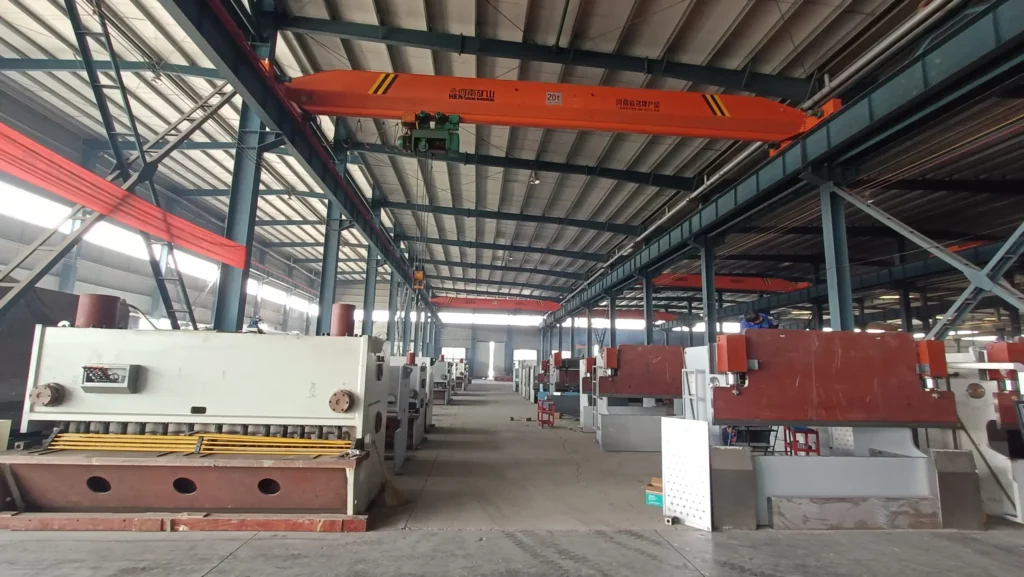
- Metal Fabrication: Hydraulic shearing machines are crucial in metal fabrication shops for cutting large sheets of metal into smaller sizes with precision.
- Automotive Industry: They play a significant role in manufacturing processes within the automotive industry, particularly in the production of vehicle components and body panels.
- Construction: Hydraulic shearing machines are used in construction for cutting metal sheets used in building structures and other construction materials.
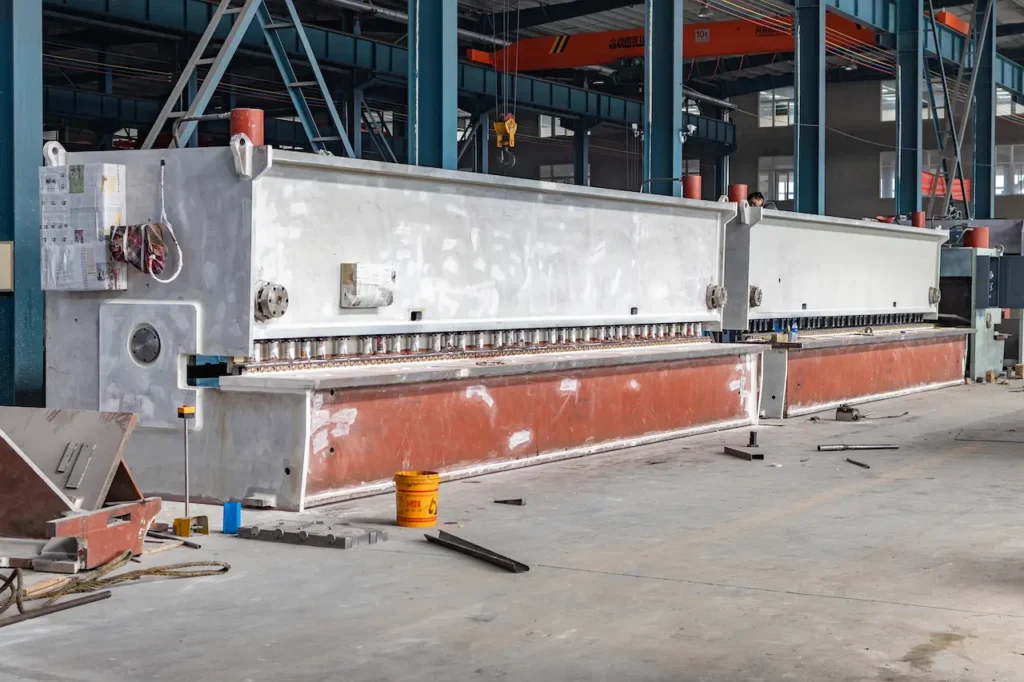
- Shipbuilding: In shipyards, these machines are used to cut metal sheets for constructing ship components and hulls.
- Aerospace Industry: They are utilized in the aerospace sector for cutting metal sheets and components used in aircraft manufacturing.
- General Manufacturing: They find application in various manufacturing processes where precise cutting of metal sheets is required, such as in appliance manufacturing and electronics.
- Scrap Recycling: Hydraulic shearing machines are also used in recycling facilities to process scrap metal efficiently.
- These machines offer high cutting precision, ease of operation, and reliability, making them indispensable in modern industrial operations
Derivative reading 2
Blade material and processing technology
Hydraulic shearing machines are vital tools in the metalworking industry, used extensively for cutting sheet metal with precision and efficiency.
Central to their functionality are the blades, which play a crucial role in determining the quality and effectiveness of the cutting process.
This article explores the materials used for hydraulic shearing machine blades, along with the processing techniques involved.
Materials Used for Blades
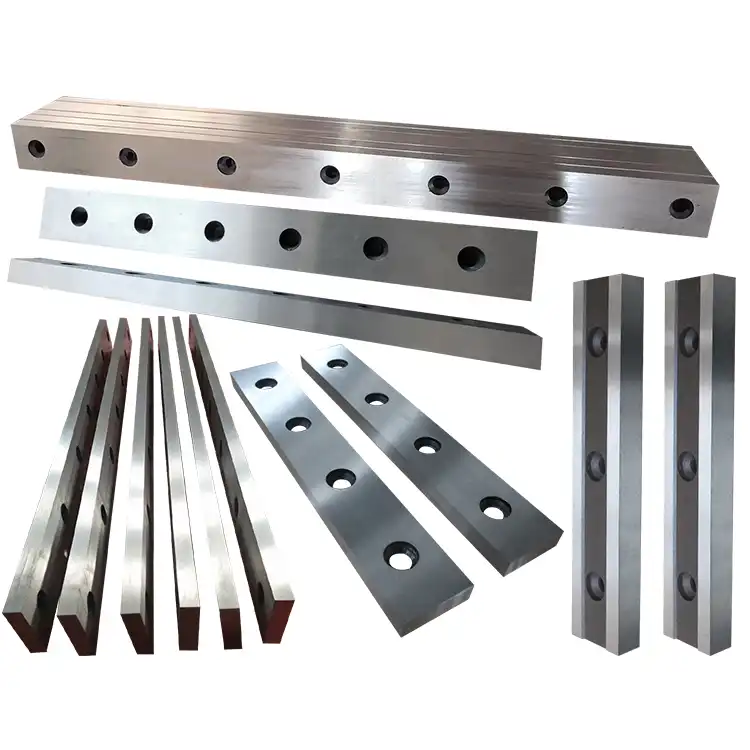
- Tool Steel: High-quality tool steels such as D2 (SKD11), H13 (SKD61), and Cr12MoV are often used for their high hardness, toughness, and resistance to abrasion. These steels maintain their sharp edges even under high-stress cutting conditions.
- Carbide Tipped Blades: Preferred for cutting harder materials or applications requiring extended blade life. Carbide tips provide enhanced cutting performance and longevity.
- High-Speed Steel (HSS): Known for their ability to withstand high temperatures and maintain hardness at elevated cutting speeds. Suitable for applications requiring high wear resistance.
Blade Processing Techniques
The manufacturing of hydraulic shearing machine blades involves several key processing techniques to ensure optimal performance:
- Heat Treatment: Blades undergo heat treatment processes such as quenching and tempering to achieve desired hardness and toughness.
- Precision Grinding: Ensures uniform blade thickness and edge geometry, critical for clean and accurate cuts.
- Surface Coatings: Some blades are coated with materials like titanium nitride (TiN) or chromium nitride (CrN) to improve wear resistance and reduce friction during cutting.
- Alignment and Balancing: Ensures smooth operation by minimizing vibration and ensuring consistent cutting performance.
Maintenance and Care
To maximize the lifespan and performance of hydraulic shearing machine blades, regular maintenance and proper care are essential:
- Lubrication: Ensure blades are adequately lubricated to reduce friction and heat generation during cutting.
- Inspection: Regularly inspect blades for signs of wear, chipping, or damage. Replace blades as necessary.
- Storage: Store blades in a clean, dry environment to prevent corrosion and maintain sharpness.
The selection of appropriate materials and the application of precise processing techniques are crucial in ensuring hydraulic shearing machine blades perform effectively and efficiently. By understanding the role of blade materials
Conclusion
Lorem ipsum dolor sit amet, consectetur adipiscing elit. Ut elit tellus, luctus nec ullamcorper mattis, pulvinar dapibus leo.