

What Is No-Mark Bending? How to Reduce Press Brake Marks on Stainless Steel, Aluminum, and Coated Sheets
No-mark bending, also called mark-free bending or non-marking bending, mainly means reducing or avoiding pressure marks, scratches, and drag marks caused by the lower die shoulders on the visible surface of the sheet.
It does not mean the material will have absolutely no deformation. Around the bending line, brightness changes, stretching, compression, or slight surface changes may still appear, especially on mirror stainless steel, aluminum, and coated sheets.
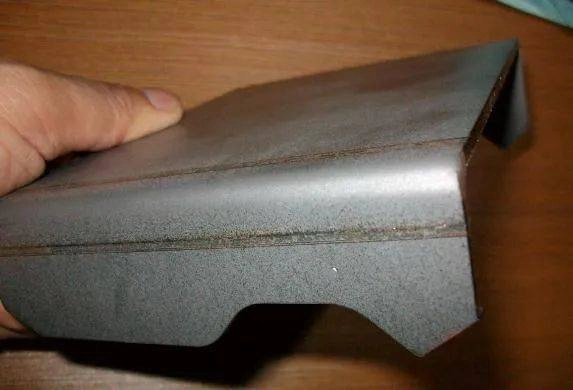
The Real Problem: Contact Between the Sheet and Lower Die Shoulders
During ordinary V-die bending, the sheet is supported by the two shoulders of the lower die. As the punch moves down, the sheet rotates, slides, and presses against the die shoulders under high pressure.
1. Sheet contacts the V-die shoulders
The sheet is supported by two hard contact points before bending starts.
2. High pressure and sliding occur
As the punch moves downward, the sheet slides over the lower die shoulders.
3. Marks appear on the surface
Hard contact and friction can create pressure marks, scratches, or bright drag lines.
4. The goal is controlled contact
No-mark bending changes the contact method between the sheet and the lower die.
Four Principles Behind No-Mark Bending
Reduce Friction
Lower friction helps reduce scratches and drag lines during bending.
Avoid Hard Contact
Film, PU pads, or soft inserts separate the sheet from the steel die shoulder.
Increase Contact Area
Larger contact radii or larger V openings reduce unit pressure.
Change Sliding Into Rolling
Roller V dies allow the contact surface to rotate with the sheet, reducing drag marks.
Seven Practical No-Mark Bending Methods
The right choice depends on material type, thickness, bend length, surface requirement, production volume, and budget.
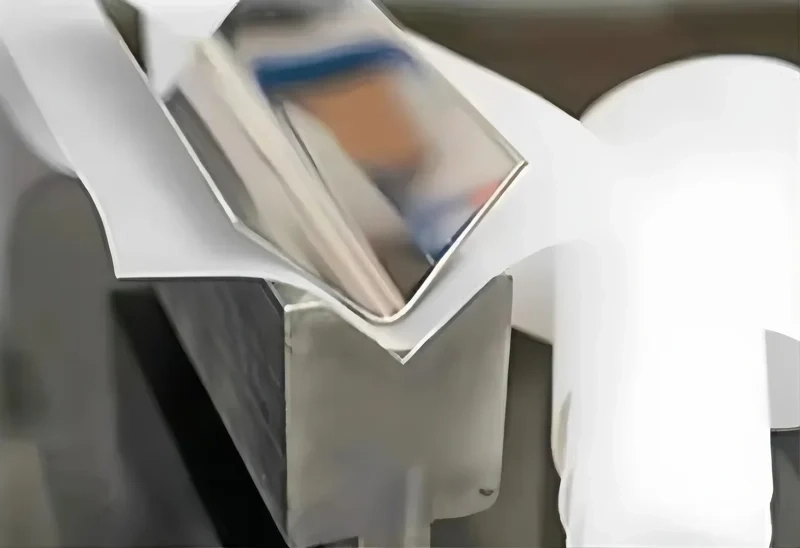
Protective Film / Bending Tape
The simplest and lowest-cost method. The film separates the sheet from the steel lower die, so the film takes most of the friction and pressure. Best for occasional stainless steel, aluminum, coated sheet, and small-batch work.
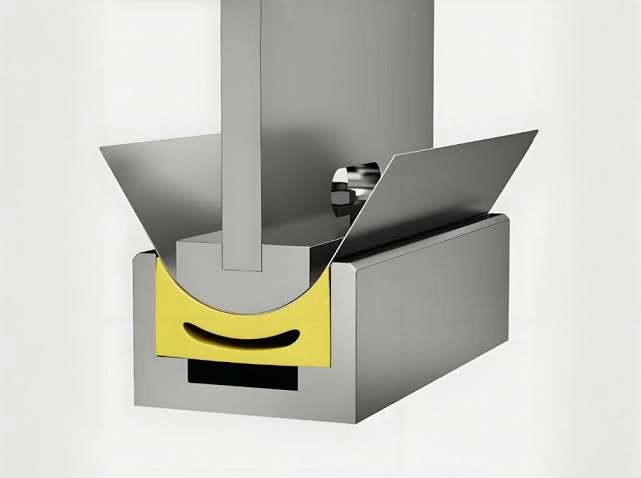
Polyurethane Pad / PU Pad
A PU pad is placed on the lower die. It deforms elastically during bending, so the sheet contacts a softer material instead of steel. Good for mirror stainless steel, aluminum, copper, and decorative panels.
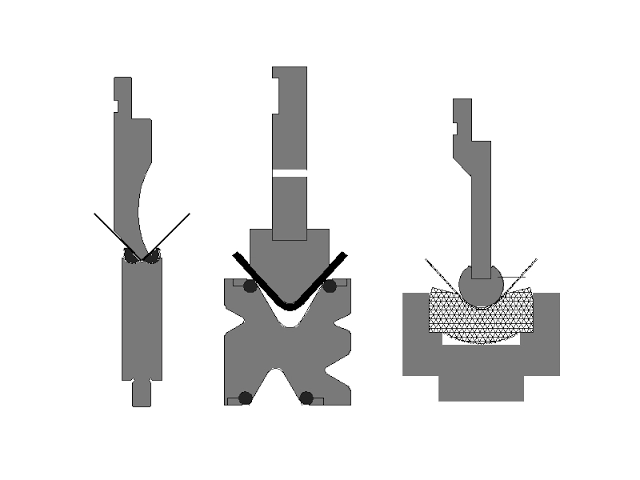
Nylon / PU / Plastic Lower Die
The lower die or contact insert is made from softer engineering material. It is more convenient than temporary film for repeated thin-sheet production, but load capacity and wear resistance are limited.
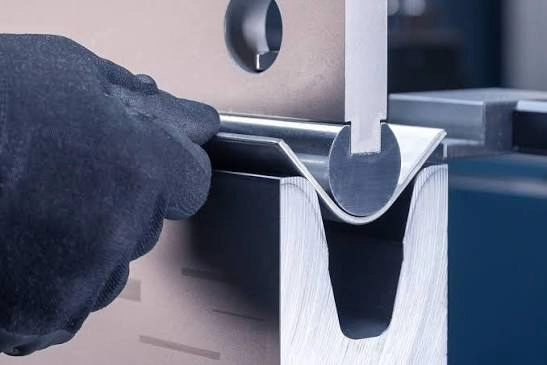
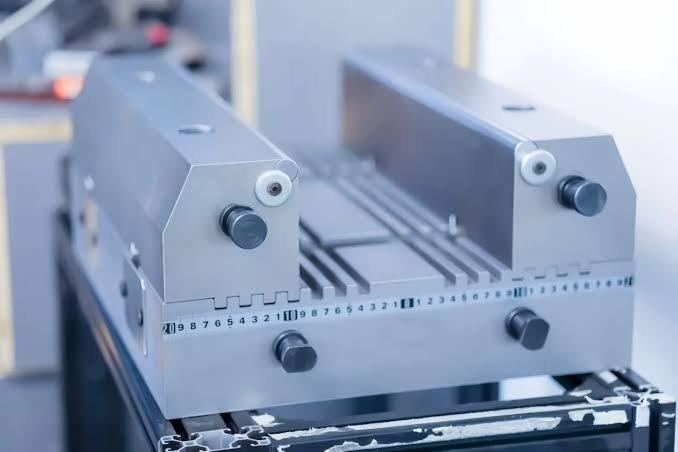
Roller-Type No-Mark Lower Die
A roller V die changes sliding friction into rolling contact. This is one of the most effective solutions for reducing drag marks on stainless steel and aluminum in batch production.
Larger V Opening
A small V opening concentrates pressure at the die shoulders. A larger V opening can reduce pressure marks, but it also changes the inside radius and minimum flange size.
Polished Large-Radius Die Shoulders
Burrs, worn edges, hard spots, and rough shoulders can scratch the sheet. Polishing and larger shoulder radii reduce friction and local pressure.
Special No-Mark Tooling Systems
Advanced tooling may combine rollers, soft inserts, replaceable protection strips, and precision clamping systems for stable production of premium visible parts.
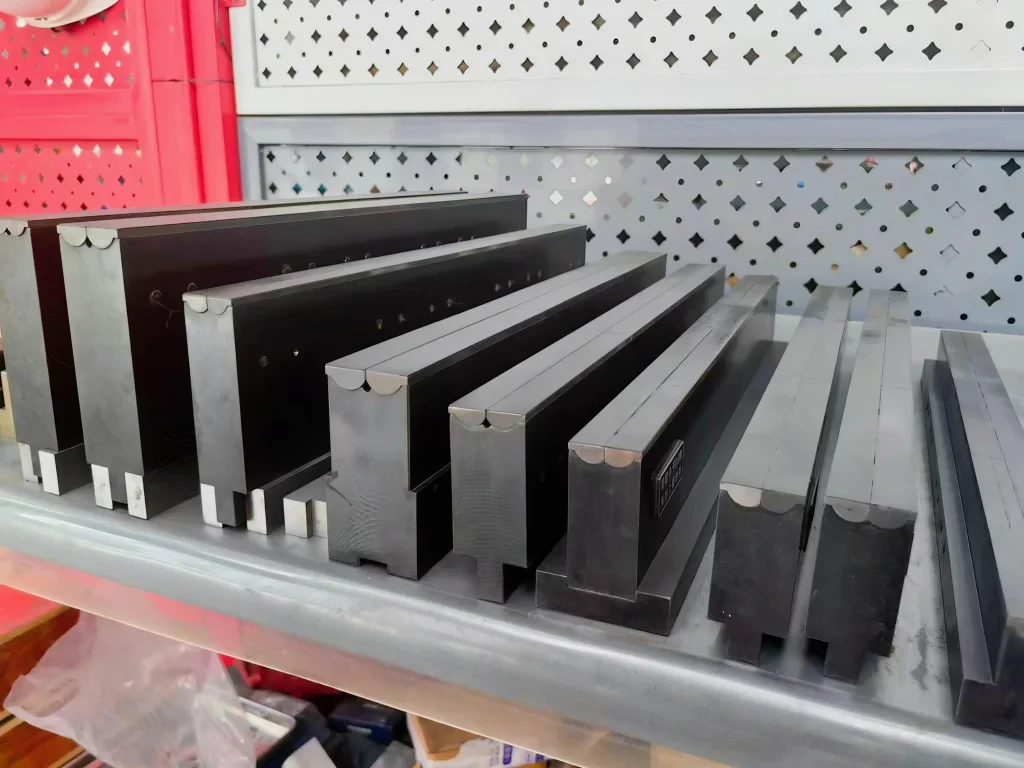
Application Images You Can Replace in Elementor
These six image blocks are editable Elementor image widgets. You can replace them with your own workshop photos, roller die photos, PU pad photos, tooling photos, or customer workpiece images.
V Opening Selection Reference
V opening selection can also affect visible surface marks. A larger V opening can reduce concentrated shoulder pressure, but it changes the inside radius and flange-size limit.
Material
Common V Opening Guide
Surface Protection Note
Mild steel
V ? 6-8 ? material thickness
Standard tooling is usually acceptable unless the surface has coating or film.
Stainless steel
V ? 8-10 ? material thickness
A slightly larger V opening helps reduce concentrated shoulder pressure.
Aluminum / coated sheet
Often larger than standard selection
Use protective film, PU pad, or roller die when appearance is important.
Mirror stainless steel
Confirm by test bending
Roller V die plus protective film is often recommended for premium surfaces.
Comparison of No-Mark Bending Solutions
Method
No-Mark Effect
Cost
Angle Stability
Best Application
Protective film / bending tape
Medium
Low
Good
Small batches and light scratch prevention
PU pad
Good
Medium
Average
Mirror sheet and decorative panels
Nylon / PU lower die
Good
Medium
Medium
Repeated production of thin visible parts
Roller V die
Very good
High
Good
Batch production with high surface requirements
Larger V opening
Medium
Low
Good
Reducing pressure marks without extra accessories
Polished large-radius die shoulder
Medium
Low
Good
General stainless steel and aluminum parts
Special no-mark tooling system
Very good
High
Very good
Premium visible parts and stable production
How to Recommend the Right Solution to Customers
Customer Situation
Recommended Solution
Simple Explanation
Occasional bending of stainless steel or aluminum
Protective film or polyurethane pad
Low-cost protection for small batches and occasional no-mark bending needs.
Decorative parts with higher surface requirements
PU pad, nylon die, or soft lower die insert
Soft contact reduces hard pressure marks from the lower die shoulder.
Stable batch production of visible parts
Roller-type no-mark lower die
Rolling contact reduces sliding friction and improves repeatability.
Mirror stainless steel, elevator panels, kitchen equipment covers
Roller V die + protective film
Combines lower friction with extra surface isolation for demanding appearance parts.
A Simple Sales Explanation You Can Use
No-mark bending is mainly achieved by changing the contact between the sheet and the lower die. During normal bending, the sheet slides on the shoulders of the V die, which may cause scratches or pressure marks. By using protective film, polyurethane pads, soft inserts, or roller-type lower dies, the contact pressure and friction can be reduced, helping to protect the surface of stainless steel, aluminum, and coated sheets.
For premium appearance parts, such as mirror stainless steel, elevator panels, kitchen equipment covers, and coated visible parts, test bending is recommended before batch production.
FAQ About No-Mark Bending
Can a press brake bend sheet metal with no marks at all?
Not always. No-mark bending reduces pressure marks, scratches, and drag lines from the lower die. Natural bending-line effects may still remain.
What is the simplest no-mark bending method?
Protective film or bending tape is usually the simplest and lowest-cost method for occasional work.
What is the best solution for batch production?
For stable batch production with high surface requirements, a roller-type no-mark lower die is often recommended.
Does a larger V opening help reduce marks?
Yes. A larger V opening can reduce concentrated pressure at the die shoulders, but it also changes inside radius and flange-size limits.
Is PU pad bending accurate?
PU pads protect the surface well, but angle stability and springback compensation usually require test bending.
Need Help Choosing a No-Mark Bending Solution?
Send us your material type, thickness, bending length, surface requirement, and production quantity. MACHNIST can help recommend a suitable press brake, tooling, V opening, and no-mark bending solution for your application.