

How Closed-Loop Control Works in a CNC Proportional Valve Press Brake
A practical explanation of how the CNC controller, proportional valves, linear scales, hydraulic cylinders, ram, and machine frame work together to achieve Y1/Y2 synchronization and stable bending performance.
Closed-loop control in a CNC proportional valve press brake does not simply mean that the controller sends a downward command to the ram. It means that the CNC system continuously measures the actual ram position, compares it with the target position, and immediately adjusts the proportional valve output if any deviation occurs. This keeps Y1 and Y2 synchronized and improves bending angle consistency, repeatability, and stability.
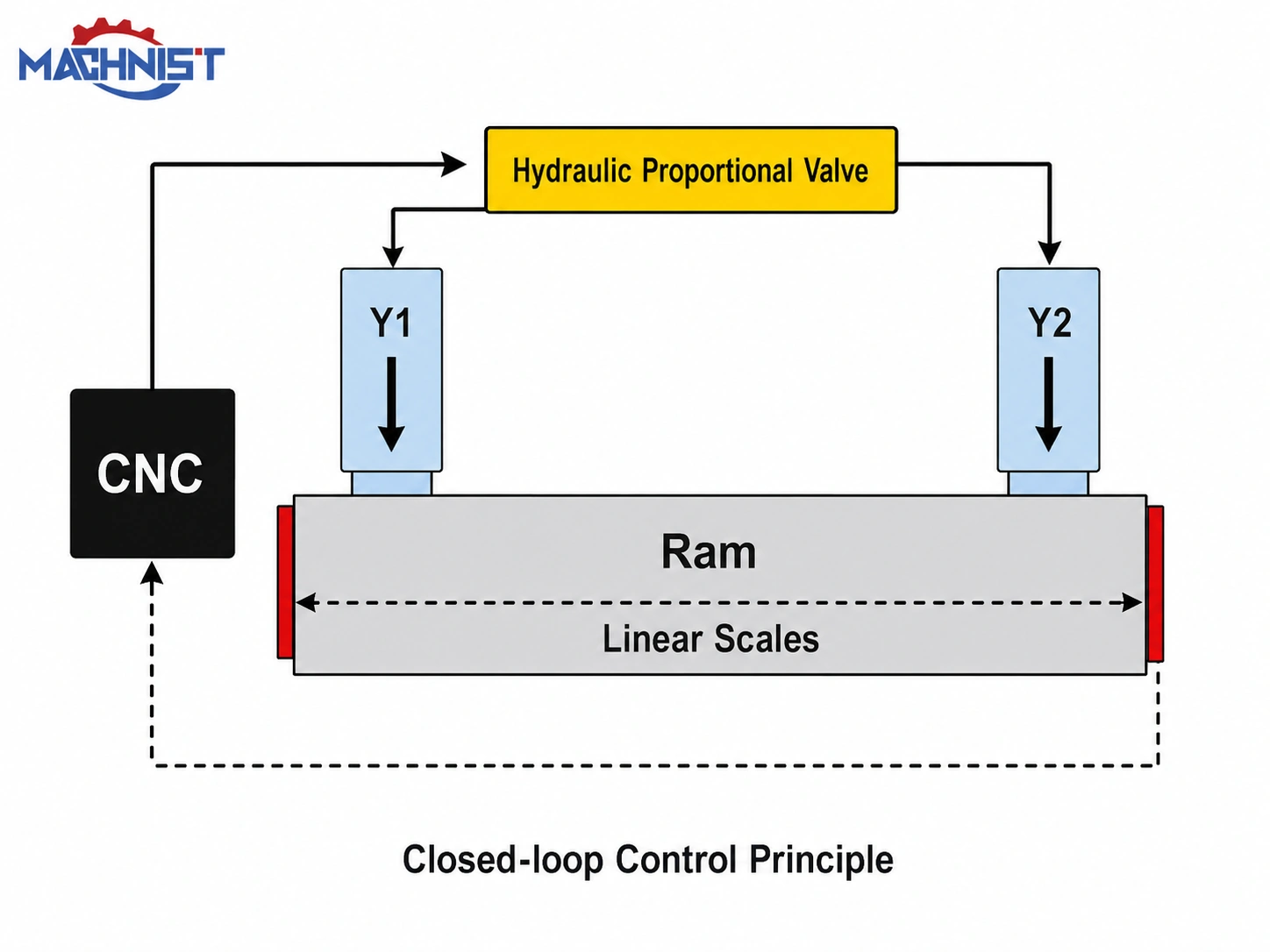
1. What Is Closed-Loop Control?
The core of closed-loop control is feedback. During press brake operation, the CNC controller defines the target position, speed, and synchronization requirement. The proportional valves regulate hydraulic oil flow according to the controller’s command. The left and right cylinders drive the ram movement. Linear scales continuously measure the actual ram position on both sides and send the data back to the CNC controller. The controller then compares the actual position with the target position and corrects the valve output if an error is detected.
Target Command
Oil Flow Control
Ram Movement
Actual Feedback
Error Comparison
Synchronization
2. How Each Key Component Works in the Closed Loop
| Component | Role in the Closed-loop System | Purpose and Benefit |
|---|---|---|
| CNC Controller | Acts as the “brain” of the system. It calculates target positions, controls Y1/Y2, receives linear scale feedback, and adjusts proportional valve output. | Allows the ram to move according to the programmed position and speed while automatically correcting synchronization errors. |
| Proportional Valve | Receives electrical commands from the CNC controller and precisely controls hydraulic oil flow and direction for each cylinder. | Converts CNC electrical signals into hydraulic movement, controlling ram speed, position, and synchronization. |
| Linear Scale | Measures the actual ram position on the left and right sides in real time and sends position feedback to the CNC controller. | Enables the controller to know the true ram position and forms the key feedback element for Y1/Y2 closed-loop control. |
| Cylinders and Ram | The left and right cylinders drive the ram according to proportional valve control, completing the bending movement. | Provides the actual mechanical movement. Better synchronization leads to more stable bending angles. |
| Machine Frame | Provides the rigid mechanical foundation for cylinders, ram, worktable, and linear scale installation. | Ensures a stable mechanical reference and reduces the influence of structural deformation on bending accuracy. |
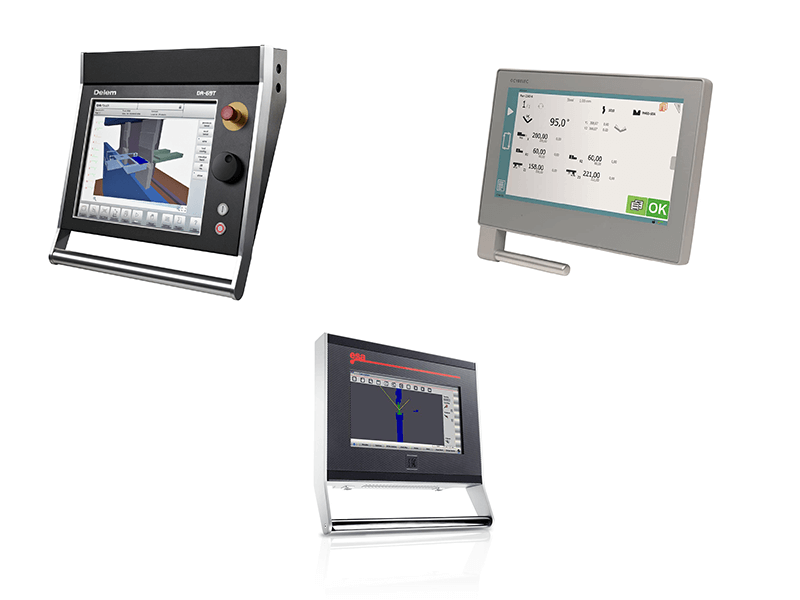
3. CNC Controller: The Brain of the System
The CNC controller sets and calculates key bending parameters, including target ram position, Y1/Y2 synchronization, approach speed, working speed, decompression, dwell time, and return movement. It also receives actual position feedback from the linear scales and calculates the deviation between the target value and the actual value.
If Y1 and Y2 show a position difference, the system does not wait until the bend is finished. It continuously adjusts the proportional valve output during movement, keeping both cylinders dynamically synchronized.
4. Proportional Valve: Converting Electronic Commands into Hydraulic Motion
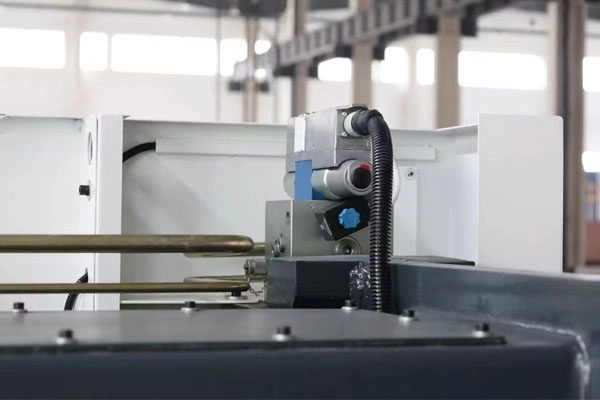
The proportional valve is a core actuator in the electro-hydraulic closed-loop system. Unlike a simple on/off valve, a proportional valve can finely regulate oil flow, direction, and pressure according to electrical signals from the CNC controller.
When the controller detects that one cylinder is moving slightly faster or slower, it adjusts the output to the corresponding proportional valve. This changes the cylinder movement in real time and corrects the Y1/Y2 position deviation.
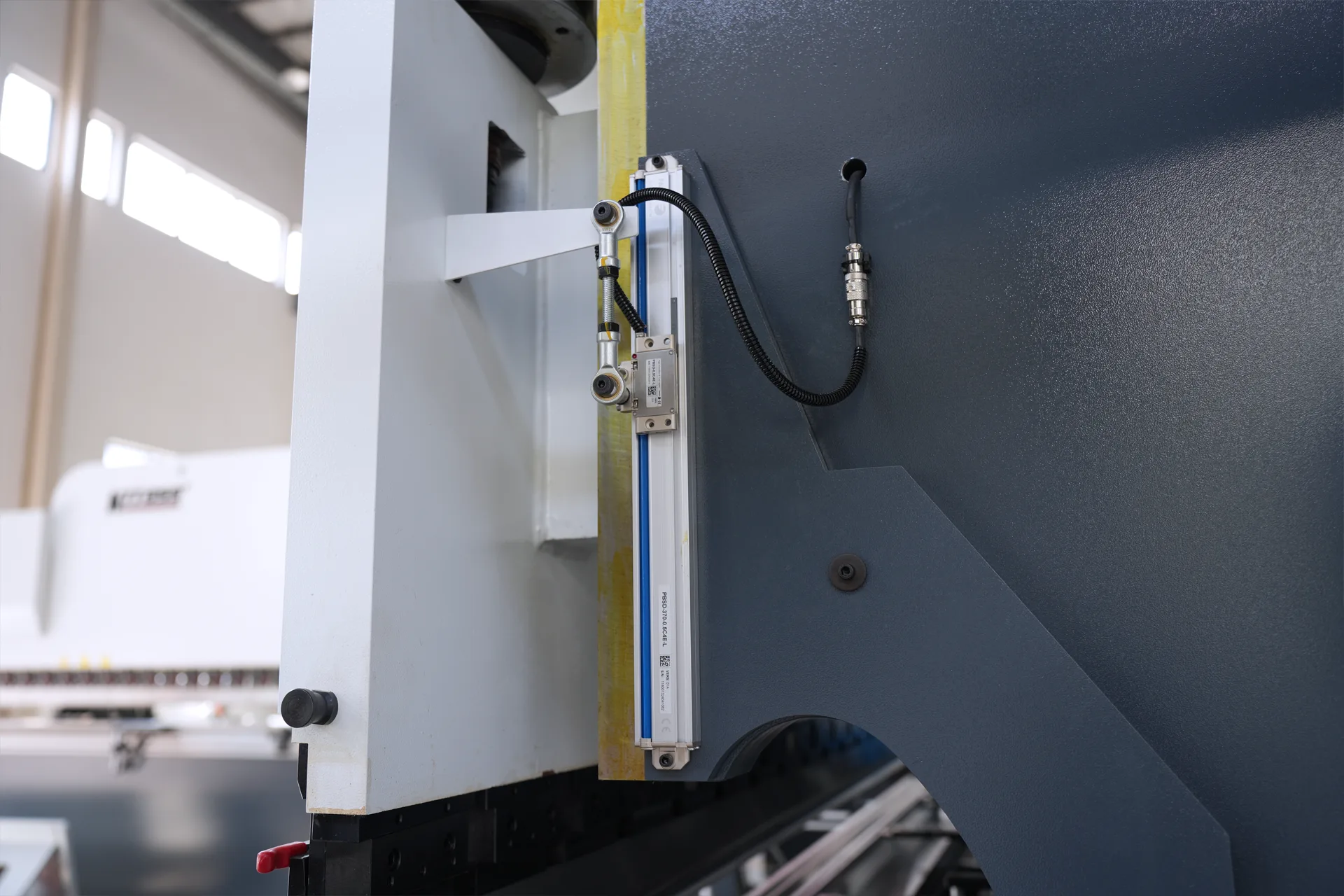
5. Linear Scale: Real-time Feedback for the Closed Loop
Linear scales are installed on both sides of the machine to measure the actual ram position in real time. Without linear scales, the controller only knows what command it has sent, but it cannot confirm whether the ram has actually reached the required position.
For example, if the target position is 100.00 mm and the actual measured position is 99.98 mm, the CNC controller recognizes a 0.02 mm error and corrects it through the proportional valve.
6. Machine Frame: The Mechanical Foundation of the Closed Loop
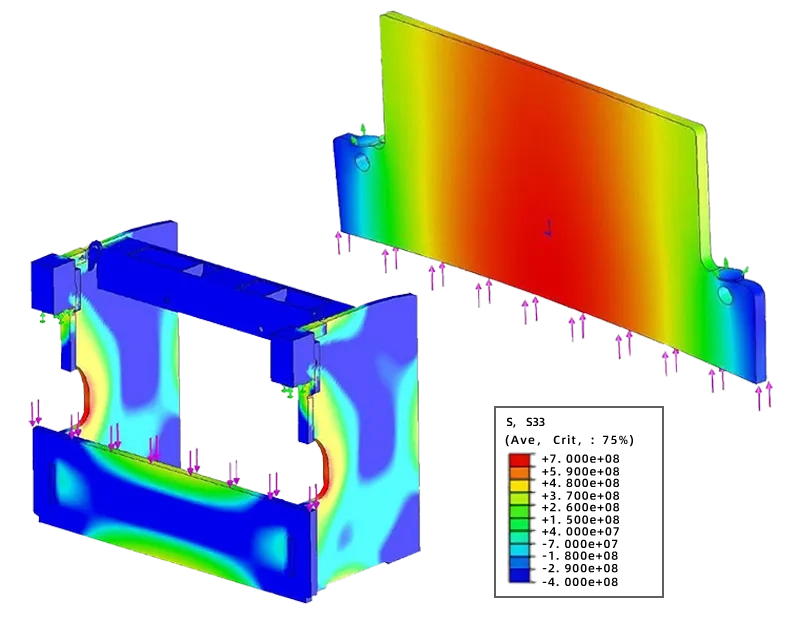
The machine frame does not perform electronic calculation, but it determines whether the closed-loop system can work on a stable mechanical foundation. The cylinders, ram, worktable, and linear scales are all mounted on the frame. Higher frame rigidity means a more stable measurement reference and more reliable ram movement.
If the frame lacks rigidity, bending force can cause structural deformation. Even if the closed-loop system corrects Y1/Y2 position, it cannot fully eliminate angle errors caused by mechanical deformation. Therefore, a high-rigidity frame and proper force analysis design are essential for maintaining bending accuracy.
7. What Problems Does Closed-loop Control Solve?
Linear scale feedback and proportional valve correction reduce ram tilting caused by asynchronous cylinder movement.
The system continuously compares the target position with the actual position, helping the ram reach the programmed position more accurately.
When the workpiece is not bent at the machine center, closed-loop control helps correct synchronization errors caused by uneven loading.
Each bending cycle is corrected based on feedback data, improving angle and dimension consistency in repeated production.
8. Closed-loop Control vs. CNC Electric Crowning
Closed-loop control and CNC electric crowning are often confused. Closed-loop control mainly controls Y1/Y2 cylinder synchronization and ram position. CNC electric crowning mainly compensates for worktable and ram deflection during long-sheet bending, improving angle consistency between the center and both ends of the workpiece.
| Item | Main Problem Solved | Related Components |
|---|---|---|
| Closed-loop Control | Ram position, Y1/Y2 synchronization, and movement error correction. | CNC controller, proportional valves, linear scales, cylinders. |
| CNC Electric Crowning | Angle difference between the center and both ends during long-sheet bending. | CNC controller, V-axis crowning mechanism, wedge crowning table. |
9. Conclusion: The Practical Value of Closed-loop Control
Closed-loop control is one of the key technologies that separates a CNC electro-hydraulic press brake from a conventional NC torsion bar press brake. By coordinating the CNC controller, proportional valves, linear scales, hydraulic cylinders, ram, and rigid frame, the system controls ram position and Y1/Y2 synchronization in real time.
For the end user, the value of closed-loop control is not just a technical concept. It means more stable bending angles, higher repeat positioning accuracy, better eccentric bending capability, less manual adjustment, and more reliable batch production performance.